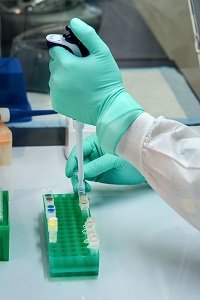
Training in molecular genetics is a potent driver of career advancement. Gaining practical experience in mol. biology and data interpretation gives people who want to succeed in biomanufacturing, molecular diagnostics, or computational biology.
Unit 1 - Lab Safety, Chemical Preparation &
Laboratory Procedures: Essential lab safety
protocols, hazardous waste disposal, reliable preparation of
buffers, solutions, and reagents, SOP for molecular biology
lab equipment.
Unit 2 - Nucleic Acid Extraction &
PCR Analysis: DNA isolation from biological source,
qualitative analysis by gel documentation system,
quantitative analysis by fluorimeter, conventional PCR
analysis.
Unit 3 - RNA Extraction, cDNA Synthesis
& Qualitative RT-PCR: RNA isolation technique,
Synthesis of complementary DNA (cDNA) from RNA sample,
Qualitative RT-PCR Run and data analysis.
Unit 4
- Real-Time PCR (qPCR), Primers, Run & Data Analysis:
Fundamentals of fluorescence-based Real Time PCR, primer
design, and amplification plot interpretation.
Unit 5 - ELISA Principles, Assays & Data Analysis:
Performing ELISA assay, generation of standard curve, and
quantification of sample concentrations from absorbance data
| Unit | Details | Technologies / Instrumentation |
|---|---|---|
| 1 | Lab Procedures | Pipetting, Preparation & pH, Biosafety & Waste Disposal |
| 2 | Extraction & PCR | Electrophoresis, Spectrophotometry, PCR & Gel Doc |
| 3 | Qualitative RT-PCR | Reverse Transcription, Gradient PCR Amplification |
| 4 | Real Time PCR | Real-Time Thermal Cycler, Primer 3 & Software |
| 5 | ELISA | Microplate Reader |
It is widely applied in Clinical Diagnostics & Precision Medicine, Therapeutics & Genetic Engineering, Forensics & Human Identification,Industrial & Environmental Biotechnology,
Practical experience in nucleic acid extraction, PCR, and data interpretation is directly transferable to roles in molecular diagnostics, genomics, and biomanufacturing, making this internship a strong stepping stone into applied molecular biology careers.
Training covers gel documentation systems for DNA/RNA analysis, fluorimeters for quantification, conventional and Real-Time PCR thermal cyclers, and a microplate reader for ELISA-based assays.
Duration: 80 Hrs or Up to 45 Days
Service Charges: We charge fee to cover the expenses of chemical and reagents that is INR 12,000 /- (Indian Nationals) & $200 (Foreign Nationals)
Note: The program utilizes advanced instrumentation, specialized chromatographic resins, and high-grade analytical reagents. Because the fee directly covers these extensive consumable costs and dedicated instrument, the fee structure is fixed and non-negotiable.
Download Training Brochure: