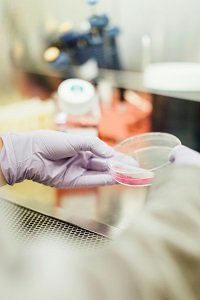
In vitro cell culture, flow cytometry and fluorescence microscopy are deeply interconnected cornerstones of modern biomedical research, requiring rigorous training to translate cellular manipulation into precise, quantitative data.
Unit 1 - In-vitro Cell Culture Lab Safety,
Preparation and Sterilization of Culture Media:
Essential lab safety protocols, hazardous waste disposal,
Preparation of basal media and filter sterilization.
Unit 2 - Sub-culturing and
Microscopic Observation by Inverted Microscopy:
Assessing cell confluence, morphology, and contamination
under inverted phase-contrast microscopy, Trypsinization and
seeding calculations.
Unit 3 - Cell Counting,
Drug Cytotoxicity Analysis and Trypan Blue Exclusion Assay:
cell counting and viability estimation, quantitation of
viable vs. non-viable cells, Calculating percentage cell
viability and MTT assay.
Unit 4 - Basics of Flow
Cytometry in drug analysis, Propidium Iodide (PI) Cell
Staining, Cell analysis by Flow Cytometer and Data Analysis:
Fundamentals of flow cytometer, Forward scatter (FSC) vs.
side scatter (SSC) gating, live-cell exclusion assay.
Unit 5 - Cell Preparation, Drug Treatment and
Staining for IFA, Fluorescence Microscopy and Data Analysis:
Sample Preparation & Treatment, Blocking
non-specific binding, primary antibody incubation,
fluorophore-conjugated secondary antibody labeling, and DAPI
staining, Imaging & Quantitative Analysis.
| Unit | Details | Technologies / Instrumentation |
|---|---|---|
| 1 | In-vitro Cell Culture | Media Preparation, Biosafety, CO2 Incubator & Sterlization technique |
| 2 | Sub-culturing & Microscopy | Inverted phase-contrast microscopy, software analysis |
| 3 | Cell Counting & Cytotoxicity | Cell counting and MTT assay by microplate reader |
| 4 | Analysis by Flow Cytometry | Flow Cytometry ( FACS) and data analysis by software |
| 5 | Fluorescence Microscopy | Fluorescence Microscopy & Data Analysis |
In research, this powerful combination is widely applied in fields like oncology, immunology, and drug discovery.
Skills in cell culture, cytotoxicity screening, and flow-based analysis are core to drug discovery and preclinical research roles, giving you practical exposure to the assays pharmaceutical and biotech companies rely on to evaluate new compounds.
You'll work with an inverted microscope for culture monitoring, a hemocytometer for cell counting, and a flow cytometer for Propidium Iodide-based viability and cytotoxicity analysis.
Duration: 80 Hrs or Up to 45 Days
Service Charges: We charge fee to cover the expenses of chemical and reagents that is INR 12,000 /- (Indian Nationals) & $200 (Foreign Nationals)
Note: The program utilizes advanced instrumentation, specialized chromatographic resins, and high-grade analytical reagents. Because the fee directly covers these extensive consumable costs and dedicated instrument, the fee structure is fixed and non-negotiable.
Download Training Brochure: